706 Frederick Street, Santa Cruz, CA 95062



Losing a front tooth can affect much more than the way your teeth look. It can make eating feel different, change the way you speak, and leave you feeling self-conscious when you talk or laugh. Fortunately, a missing front tooth does not always mean you need a dental implant. A dental bridge can be an effective way to fill the space and restore the function of your teeth.
But there is more than one type of dental bridge. The best choice depends on factors such as the location of the missing tooth, the health of the neighboring teeth, your bite, your bone health, and your long-term dental goals.
At Aura Marcela Torres DDS in Santa Cruz, CA, Dr. Aura Marcela Torres can evaluate your teeth and discuss which replacement option is appropriate for your individual needs.
Why Front Teeth Require Special Consideration
Replacing a front tooth involves both appearance and function. Unlike a back tooth that is mostly hidden when you smile, a front tooth is highly visible when you speak, eat, or interact with other people.
A well-designed dental bridge for a front tooth should complement the surrounding teeth in shape, size, and shade. It also needs to fit comfortably and function properly when you bite.
Several factors are considered before recommending a bridge, including:
- The number of missing teeth
- The condition of the neighboring teeth
- The health of your gums
- Your natural bite
- The amount of available space
- The position of the missing tooth
- Your cosmetic preferences
- Your overall oral health
This is why there is no single dental bridge that is automatically best for every patient.
Which Type of Dental Bridge Is Usually Best for Front Teeth?
For many patients who are missing one front tooth, a Maryland dental bridge or a traditional dental bridge may be considered. However, an implant-supported restoration can also be an option in appropriate cases.
The right choice depends on your specific circumstances rather than simply choosing the most popular option.
Let’s look at the main types of bridges that may be used to replace a missing front tooth.
Maryland Dental Bridges
A Maryland bridge is often considered for replacing a missing front tooth because it can preserve more of the natural tooth structure than a traditional bridge.
Instead of placing crowns over the neighboring teeth, a Maryland bridge typically uses small wings or frameworks that attach to the back surfaces of adjacent teeth. The replacement tooth sits in the space created by the missing tooth.
One of the appealing features of this approach is that the neighboring teeth may require less alteration than they would for a traditional bridge.
A Maryland dental bridge may be particularly useful when the supporting teeth are healthy and the bite is suitable. However, it is not appropriate for every patient. The strength of the attachment and the forces placed on the restoration need to be carefully evaluated.
Traditional Dental Bridges
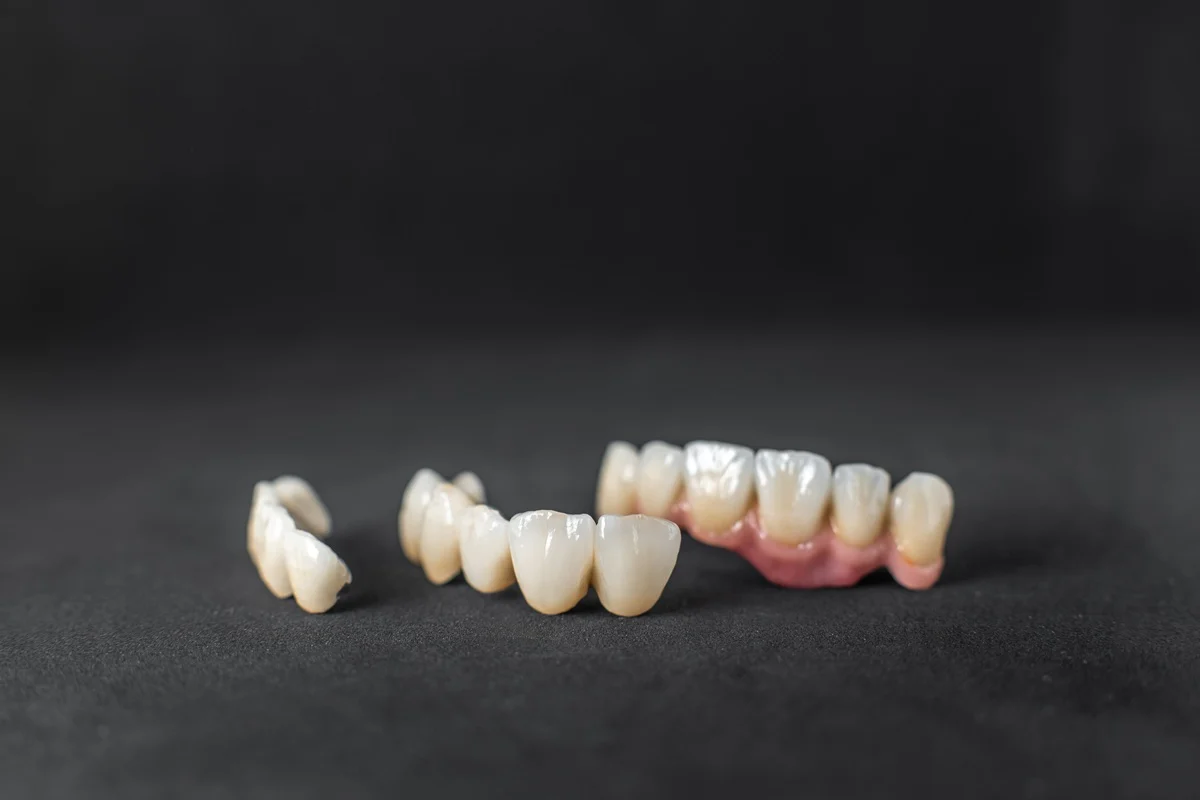
A traditional dental bridge uses a replacement tooth, called a pontic, supported by dental crowns placed on neighboring teeth.
For example, if one front tooth is missing and the teeth on either side are suitable supports, a traditional bridge can use those teeth to anchor the replacement.
Traditional bridges have been used for many years and can provide a stable, natural-looking restoration when properly planned and maintained.
The main consideration is that the supporting teeth generally need to be prepared to accommodate the crowns. If those teeth already have large fillings or crowns, this may be less of a concern. If they are completely healthy, however, your dentist will carefully weigh the benefits and drawbacks before recommending this approach.
Cantilever Dental Bridges
A cantilever bridge is supported by an adjacent tooth or teeth on only one side of the missing space.
This design can sometimes be considered when there is only one suitable neighboring tooth available. However, the location of the missing tooth and the patient’s bite are especially important.
Because front teeth experience different biting forces than back teeth, a cantilever bridge is not automatically appropriate simply because there is a missing tooth.
Your dentist needs to determine whether the supporting tooth can safely handle the forces generated during normal biting and chewing.
Implant-Supported Dental Restorations
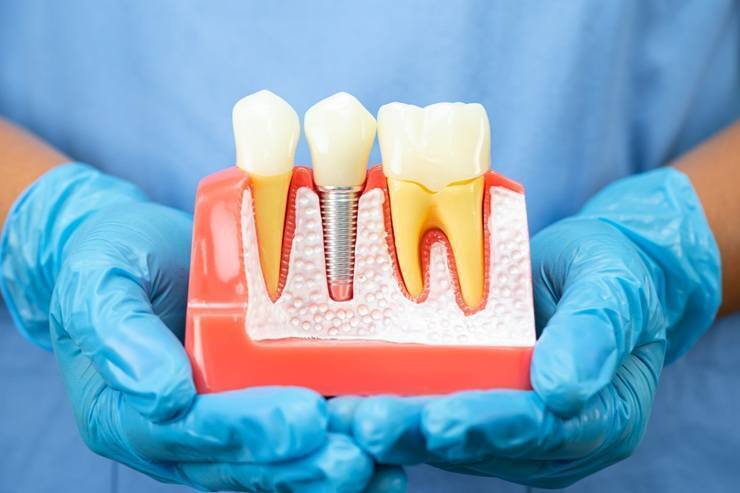
Although an implant-supported restoration is not technically the same as a conventional dental bridge, it is another option worth discussing when replacing a missing front tooth.
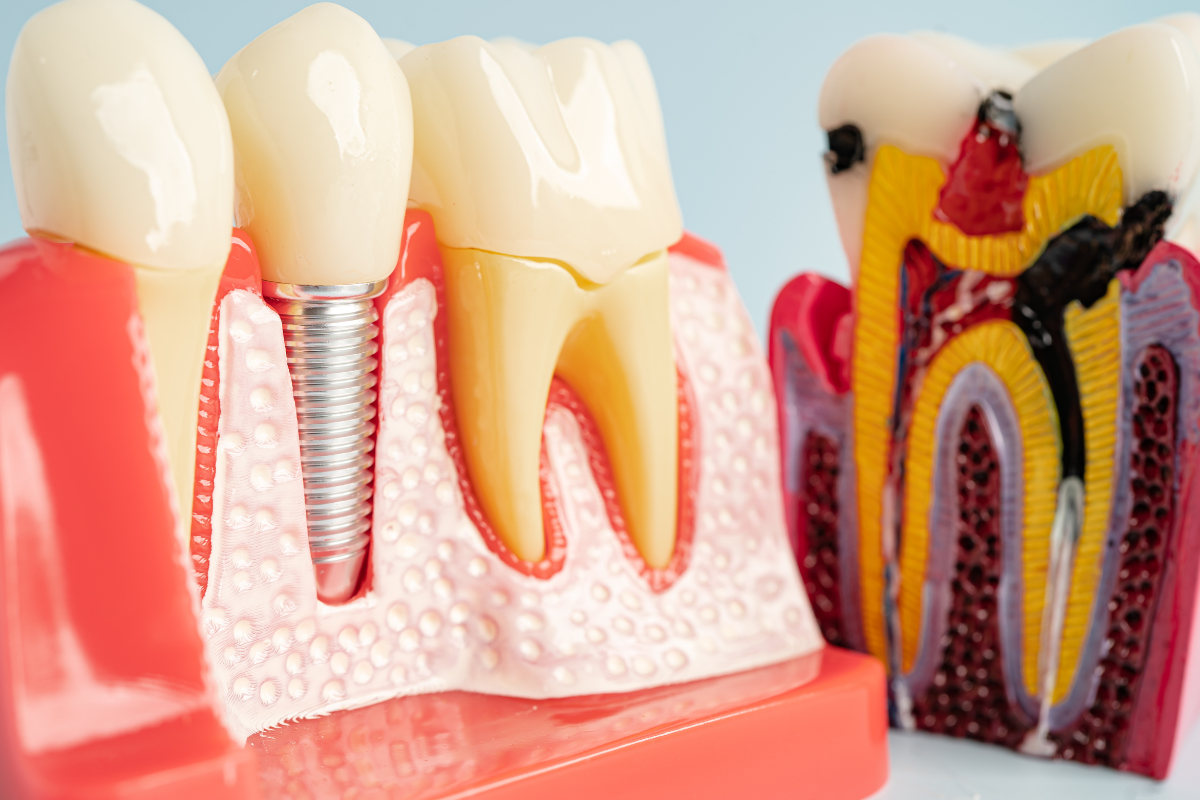
A dental implant is placed into the jawbone and acts as an artificial tooth root. Once the implant has integrated with the surrounding bone, it can support a dental crown.
For a patient missing a single front tooth, an implant-supported crown may provide a solution that does not depend on neighboring teeth for support.
However, implants require adequate bone and healthy oral tissues, and the treatment process generally takes longer than placing a conventional bridge. A comprehensive examination is necessary to determine whether an implant is appropriate.
So, Which Dental Bridge Is Best for Your Front Teeth?
There is no universal winner. The best restoration is the one that fits your oral health, bite, cosmetic expectations, and long-term needs.
A Maryland bridge may be attractive when preserving the neighboring teeth is a priority and the bite is suitable.
A traditional bridge may be appropriate when the neighboring teeth can provide reliable support, particularly when those teeth already require crowns.
An implant-supported restoration may be considered when you want a tooth replacement that does not rely on adjacent teeth and you have suitable bone and gum health.
The decision should be made after an examination rather than based solely on the type of bridge you have heard about online.
What Makes a Front Tooth Bridge Look Natural?
A front tooth bridge should blend into the rest of your smile rather than stand out as an obvious replacement.
Several details contribute to a natural-looking result. The dentist and dental laboratory consider the color, shape, proportions, translucency, and position of the replacement tooth. The surrounding teeth also provide important clues about the appropriate appearance.
Your natural teeth are not perfectly identical. Small variations in shade and shape can actually make a restoration look more realistic.
The goal is not simply to place a white replacement tooth in the empty space. It is to create a restoration that fits harmoniously with the teeth around it.
What Happens During the Dental Bridge Process?
Getting a bridge usually involves several stages, although the exact process depends on the type of restoration selected.
First, Dr. Aura Marcela Torres will evaluate the missing tooth and surrounding structures. This may include examining your gums, neighboring teeth, bite, and available space.
If a traditional bridge is selected, the supporting teeth may be prepared so that crowns can fit over them. Impressions or digital scans can then be used to help design the restoration.
A temporary restoration may be provided while the permanent bridge is being fabricated. At the final appointment, the bridge is carefully evaluated for fit, comfort, appearance, and bite before it is permanently placed.
The process is customized according to the restoration and your individual dental needs.
How Long Can a Front Dental Bridge Last?
A dental bridge is not necessarily a lifetime restoration. Its longevity depends on several factors, including oral hygiene, bite forces, the health of the supporting teeth, diet, and regular dental care.
Taking care of the bridge is just as important as caring for your natural teeth.
Brush twice a day with fluoride toothpaste and clean carefully around and underneath the bridge. Your dental team can show you techniques and tools that make cleaning easier.
Regular dental examinations are also important because your dentist can monitor the bridge, supporting teeth, and surrounding gum tissue over time.
What Do Patients Say About Dr. Aura Marcela Torres?
Choosing a dentist to restore a missing front tooth is a personal decision. Experience, communication, comfort, and trust can all matter.
Patients at Aura Marcela Torres DDS have shared positive experiences about their long-term care.
Wendy Ballen says:
“My husband and I have been going to Dr. Torres for more than 30 years. She is a wonderful dentist, and I have always had full confidence in her work. She always uses cutting edge techniques. She is very gentle while working on me, which makes me feel comfortable. Her office staff has always been very warm and friendly. The dental assistants are very competent. I have never had anything to complain about with this office. I highly recommend Dr. Torres.”
Another patient, Martha Martine, shared:
“Dr Torres is the best dentist I have seen, ever. Our family has been going to her office for 25 years. I love the fabulous new cleaning polishing process. Virtually pain free, and I’m a wimp.”
For authentic and recent patient reviews, visit the Aura Marcela Torres DDS Google Business Profile. Patients have shared their experiences with Dr. Torres, including her gentle approach, advanced techniques, and friendly office team.
How Do You Know Which Option Is Right for You?
Choosing between a Maryland bridge, traditional bridge, cantilever bridge, or an implant-supported restoration requires more than looking at pictures or comparing prices.
Your dentist will consider your individual circumstances.
For example, if the neighboring teeth are strong and healthy, preserving them may be an important consideration. If those teeth already need extensive dental work, a traditional bridge may make more sense. If you are looking for an option that does not rely on neighboring teeth and have adequate bone support, an implant may be worth discussing.
Your bite is another important factor. Front teeth are involved in biting and guiding the jaw during certain movements, so the restoration needs to work with your natural bite rather than against it.
Restore Your Missing Front Tooth in Santa Cruz, CA
A missing front tooth can affect your confidence, comfort, and everyday function, but you have options. The best dental bridge is not necessarily the same for every patient. A thorough evaluation can help determine whether a Maryland bridge, traditional bridge, cantilever design, or another tooth-replacement option is appropriate for you.
At Aura Marcela Torres DDS, Dr. Aura Marcela Torres provides personalized dental care for patients in Santa Cruz, CA. If you are considering replacing a missing front tooth, schedule a consultation at 706 Frederick St, Santa Cruz, CA 95062 to discuss your options and find a treatment approach suited to your oral health and goals.
Frequently Asked Questions About Front Tooth Bridges
Q.1. Can a dental bridge replace one missing front tooth?
Yes. Several types of restorations can be used to replace a single missing front tooth. The appropriate option depends on the surrounding teeth, gums, bite, bone health, and your treatment goals.
Q.2. Is a Maryland bridge good for front teeth?
A Maryland bridge can be a suitable option for some missing front teeth, particularly when preserving the neighboring teeth is important. However, the patient’s bite and the condition of the supporting teeth must be evaluated first.
Q.3. Is a dental bridge better than an implant for a front tooth?
Neither is automatically better for everyone. A bridge may provide a faster tooth-replacement option in some situations, while an implant-supported restoration can replace a tooth without relying on adjacent teeth. Your dentist can explain which approach fits your circumstances.
Q.4. Can a front tooth bridge look natural?
Yes. Modern dental materials and careful treatment planning can produce restorations designed to blend with the surrounding teeth. Tooth shade, shape, proportions, and positioning are all considered.
Q.5. How should I care for my dental bridge?
Continue brushing twice daily and cleaning between your teeth and around the bridge. Special flossing tools or interdental cleaners may be recommended to help clean underneath the replacement tooth.